3D Printing for Visual Engineering

Claro Studioworks has entered the 3D printing game. And I’d like to welcome you to my seminar on how I make $10,000 a month selling keychains.

Just kidding…

What I really want to talk about is 3D printing for visual engineering. My first introduction to 3D printing was the ubiquitous articulated dragons sold at every town’s art fair. You’ll find them next to the lady selling bedazzled Walmart flip-flops for $40.

This is my way of saying I had relegated the technology to a gimmick for folks trying to make a quick buck. In reality, it’s the solution to a multitude of problems I’ve faced since Claro began. Only a few months in and I can’t imagine pursuing visual engineering without 3D printing. In this post, I’m going to walk you through a number of scenarios utilizing 3D printing for visual engineering, and how we at Claro Studioworks are better equipped to serve you because of it.

The Basics: FDM Printing

Quick primer on 3D printing, or Fused Deposition Modeling (FDM) printing: essentially, a heated nozzle extrudes melted plastic filament from a spool onto a build plate one layer at a time. On the computer side, a 3D model is imported into software known as a “slicer” that converts the model’s shape into that nozzle’s movement path, layer by layer. The filaments come in different materials that affect the model’s final properties like appearance, strength, and impact resistance.
Do yourself a favor and go to Maker World—get past the fidget spinners—and look at the useful and insanely specific solutions to everyday life. Need an armrest storage tray for your 2019 Mazda 3? Here ya go.

Faster Rigging Development

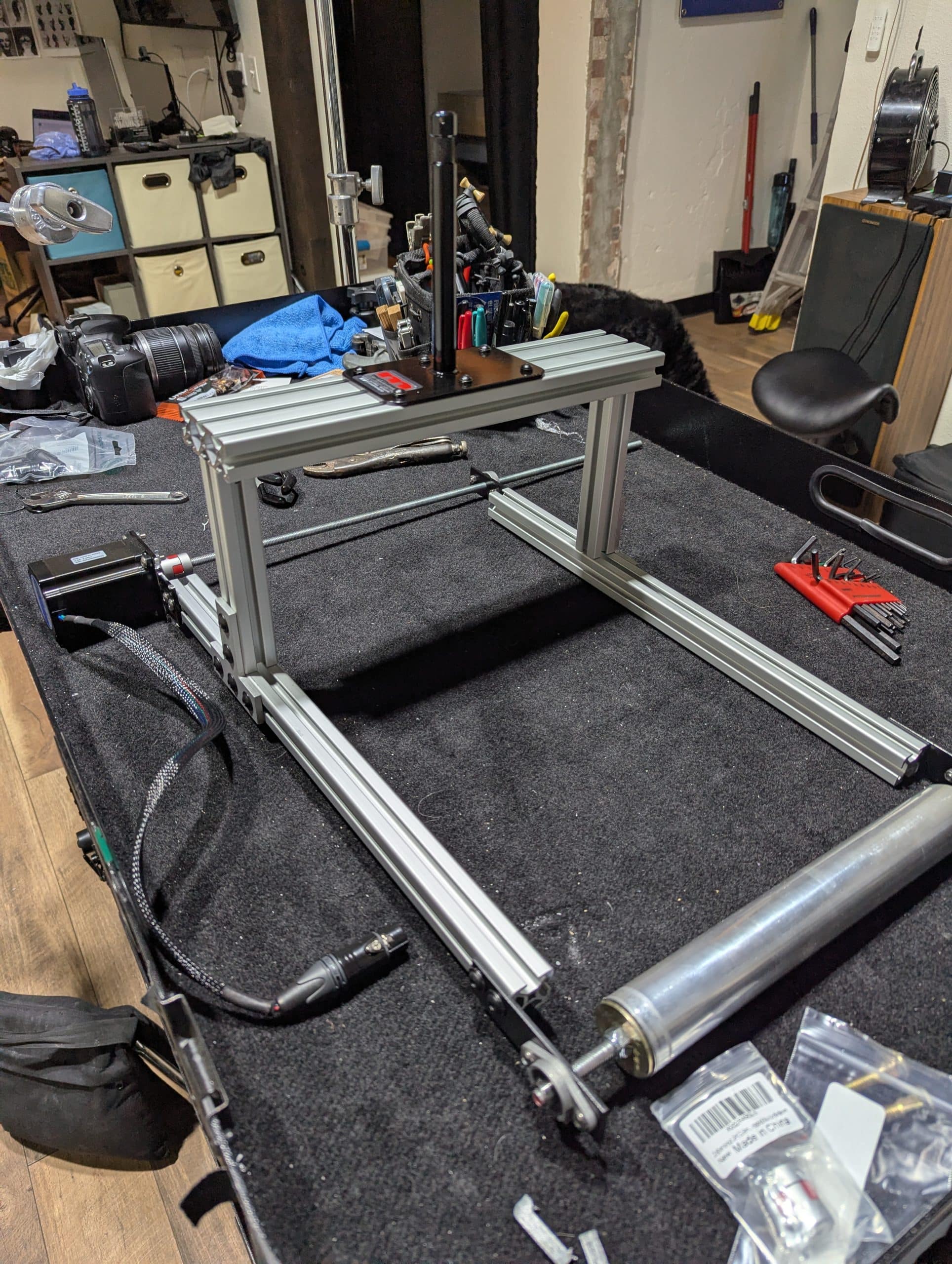
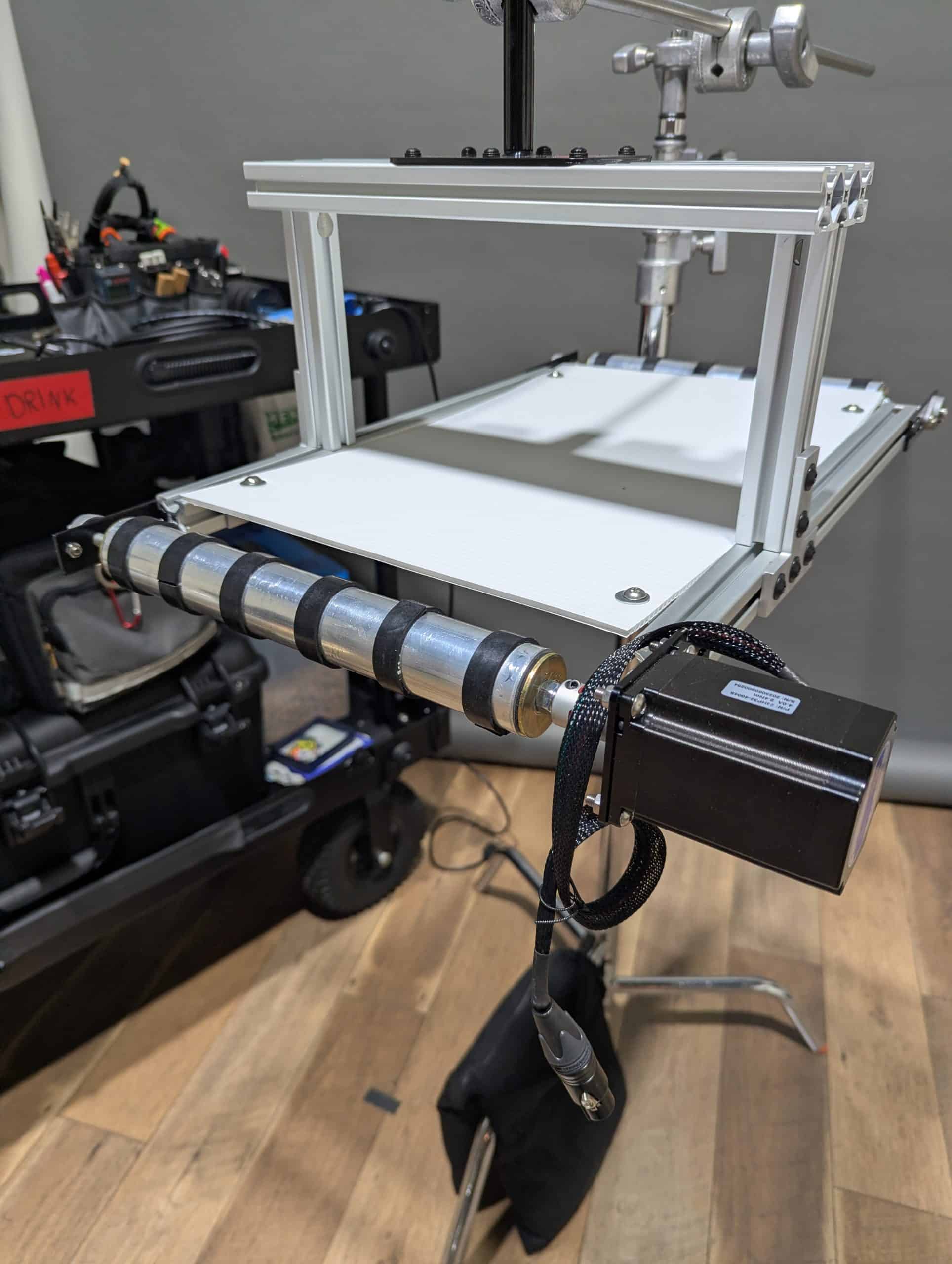
This Spring, I’ve been building a motorized conveyor belt to add to our collection of tabletop SFX rigs. It’s a custom design built to suit Claro’s needs, so it isn’t following the standard measurements from industrial suppliers. Building it from the ground up like this involves a lot of trial and error, which brings me to the first scenario of 3D printing for visual engineering: Faster rigging development.
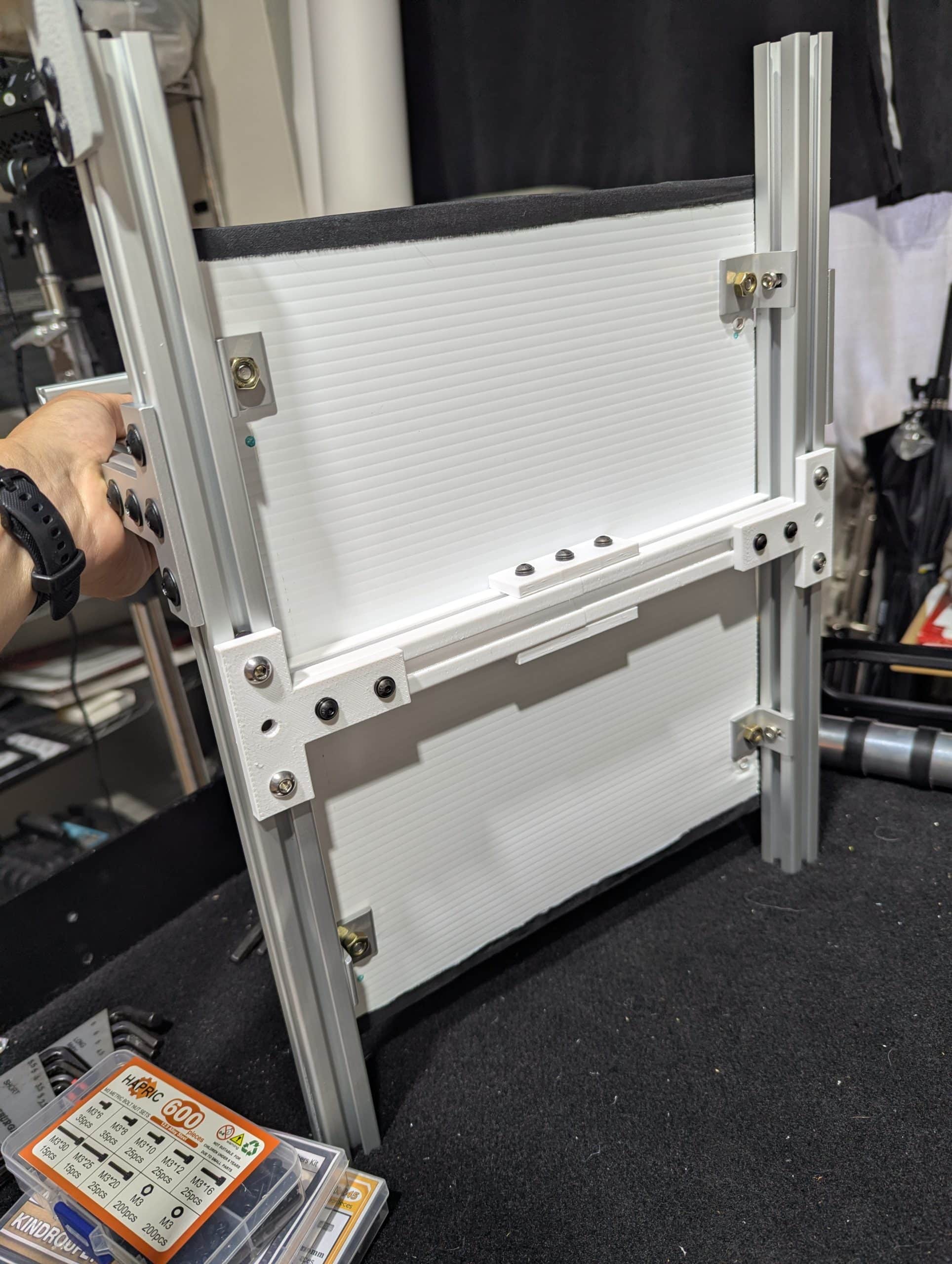
After acquiring all the parts, testing revealed I needed more lateral support than previously planned. Instead of ordering yet another batch of custom-cut aluminum extrusions, I was able to design, print, and install my own solution in two days, instead of the two weeks it would take the supplier to ship it out. Huge win.

The conveyor belt is designed to be held from the top and hoisted over the set with a C-stand, but as I continued testing, I saw it also needed to operate while sitting on a flat surface. Utilizing CAD, I created compact pedestals that slid onto the frame and solved the problem entirely. Designed, printed, and installed in under four hours on the same day. No poring through Grainger catalogs or burning the midnight oil on McMaster-Carr’s website. This may not seem like the most exciting use of a 3D printing for visual engineering, but having a solution travel from your head to your hands on the same day is pretty mind-blowing. This capability directly translates to faster creative development and the ability to maneuver tight production schedules.

Clients Love Options

I was debriefing with a photographer who had just completed a quick turnaround on a shoot for a brand of pancake mix. He was lamenting the fact that he wasn’t able to provide enough options for the hero syrup pour on such a tight timeline. He asked what solutions Claro could provide for circumstances like these, which brings me to the next scenario: Clients Love Options. The client in this case wasn’t pleased with the volume of syrup pouring in the photos; they wanted a thicker stream hitting the pancakes.
Now imagine this shoot was taking place at Claro Studioworks. Taking full advantage of our remote production setup during prep, we are able to demo how things will look on shoot day. If it’s not right, I design the solution – in this case, containers with varying spout angles – and print them on the same day so they’re ready when the client arrives for the shoot. The art department doesn’t have to cross their fingers hoping that Target has the right container. We make the perfect solution in-house.

CSW_3DPrintingforVisualEngineering_GIF1

art department, rejoice!

Speaking of the art department, my colleagues there helped me see that 3D printing for visual engineering isn’t just tied to SFX rigging development. Food stylists love 3D-printed solutions. Spacers, wedges, skewers, and stands can all be available on hand to get that burger positioned juussst right. 
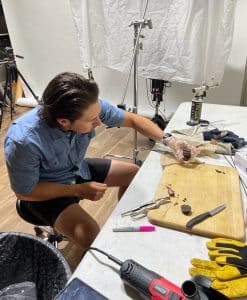
Food styling using 3D printed wedges on set.

On a recent shoot with Verse Chocolate, we printed wedges in dozens of sizes and angles to display their new product line of chocolate cups. From propping up the packaging out of light glare to the tiniest tilt forward of a dark raspberry cup, they proved indispensable to our workflow.

A photographer named Matt Faria helped tip the scale that got me into 3D printing in the first place. He had a long series of posts showing its applicability for product photography. The light bulb turned on when he started featuring his own custom set dec: pattern, brand logo, design, color – completely customizable to each shoot. 

This isn’t a technique reserved solely for the commercial world; Hollywood has a long history of embracing new technology to advance visuals on screen. Effects shops have already incorporated 3D printing into their workflows to make prototypes, detailed molds, and on-screen parts. Superman (2025), led by the team at Legacy Effects, relied heavily on Bambu Lab printers to bring suits and armor to the screen.

Form-Fitted Rigging

What I find to be one of the most exciting uses of 3D printing for visual engineering is the ability to quickly make custom solutions form-fitted to a specific product. Take whiskey, for example. Even within the same category, varying labels and bottle shapes rule out one-size-fits-all solutions. Just compare Jack Daniel’s iconic square bottle to Rieger’s – approaching a simple pour shot looks completely different for each of these.

What’s giving me a lot of juice at the moment is designing an ecosystem of 3D-printed accessories that share a common mount pattern. This way, I’m able to create SFX attachments, enclosures, and mounting options that plug and play with our array of actuators and motors. So whether we’re pouring Bulleit or Blanton’s, we’re only a print away from success.

I took our conveyor belt and these early prototypes of 3D-printed attachments on a test shoot using some local summer veggies. We were able to achieve better visuals and faster turnaround in our testing of kale drops, brussels sprout launches, and styled salad pours. Check out the results:

Fuel on the Fire

Despite the gimmicks you’ll see at markets and fairs, 3D printing taps into a very human side of creation. There’s a childhood joy in watching your imagination come to life right in front of you. For me, there has always been a deep satisfaction in building SFX rigs or directing commercials – the work of creating translated directly onto the screen.

Now, the ability to CAD design and print solutions has only thrown fuel on the fire that is moving Claro Studioworks forward. 3D printing for visual engineering has cemented its place into our workflow here in the studio, and I’m confident our clients will feel the immediate benefits.

And just maybe… if you’re nice to me… I’ll print you an articulated dragon too.